Have you ever walked into a kitchen and felt instantly overwhelmed by its size? Maybe it’s the cramped cabinets, the limited counter space, or just how tiny everything feels. But what if I told you that the secret to making these spaces feel bigger lies not in moving walls or buying expensive furniture, but in understanding light? That’s right – light isn’t just about seeing your food better. It’s about creating an illusion of space, comfort, and openness. In small kitchens, where every inch matters, mastering light strategies can completely change how you experience your cooking area.
Small kitchens present unique challenges. They often feel confined, especially when they lack proper lighting. But here’s the thing – good lighting isn’t just about brightness. It’s about creating an atmosphere that makes the space feel larger, more welcoming, and ultimately more functional. Whether you’re working in a studio apartment or trying to maximize your kitchenette in a tiny house, understanding how to work with light can make all the difference. Think about it – when a room feels bright and open, it seems to stretch beyond what you’d expect. And that’s exactly what we want to achieve in those tight spots. We’ll explore everything from choosing the right fixtures to using color and reflection to create that magical feeling of spaciousness.
Understanding Natural Light
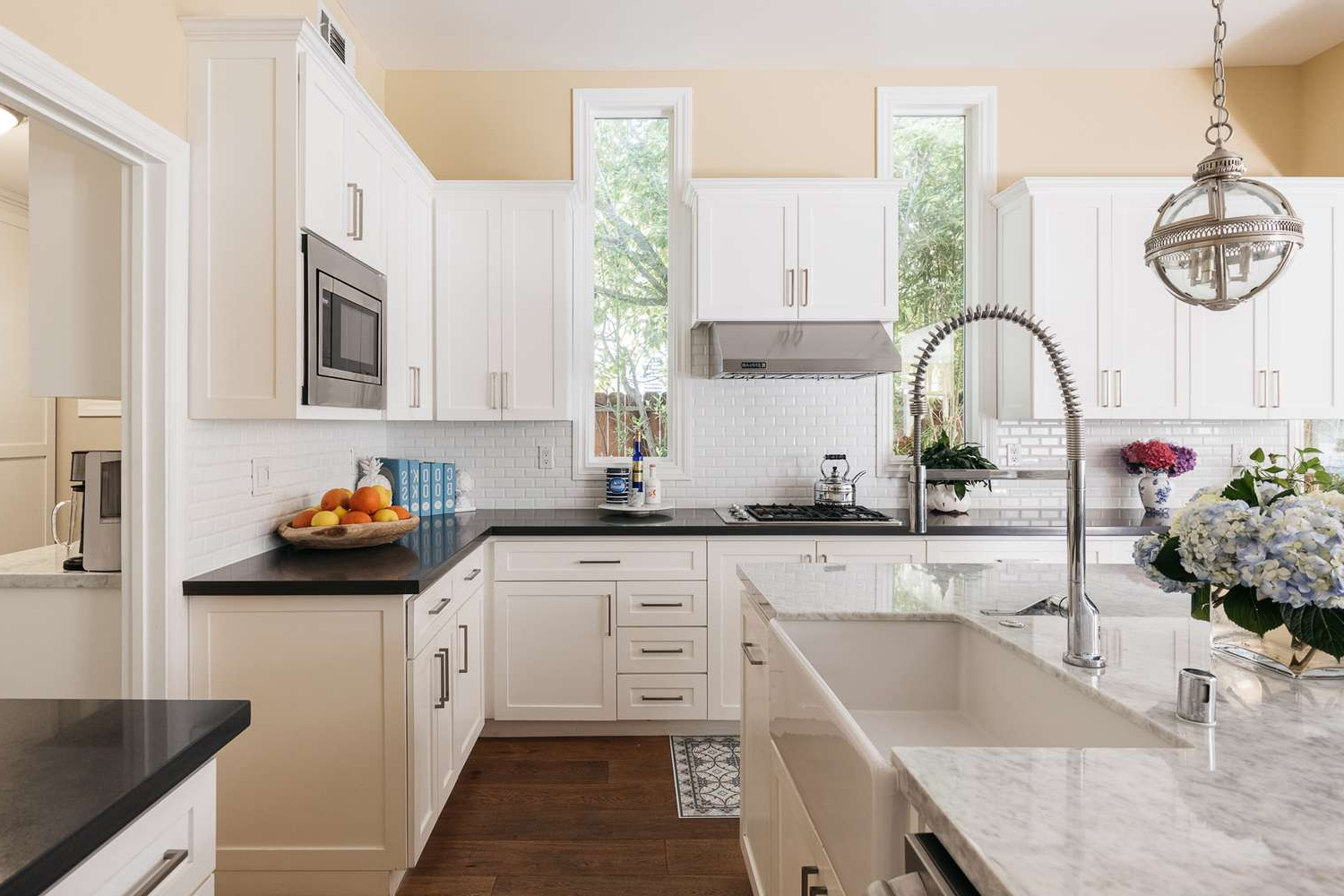
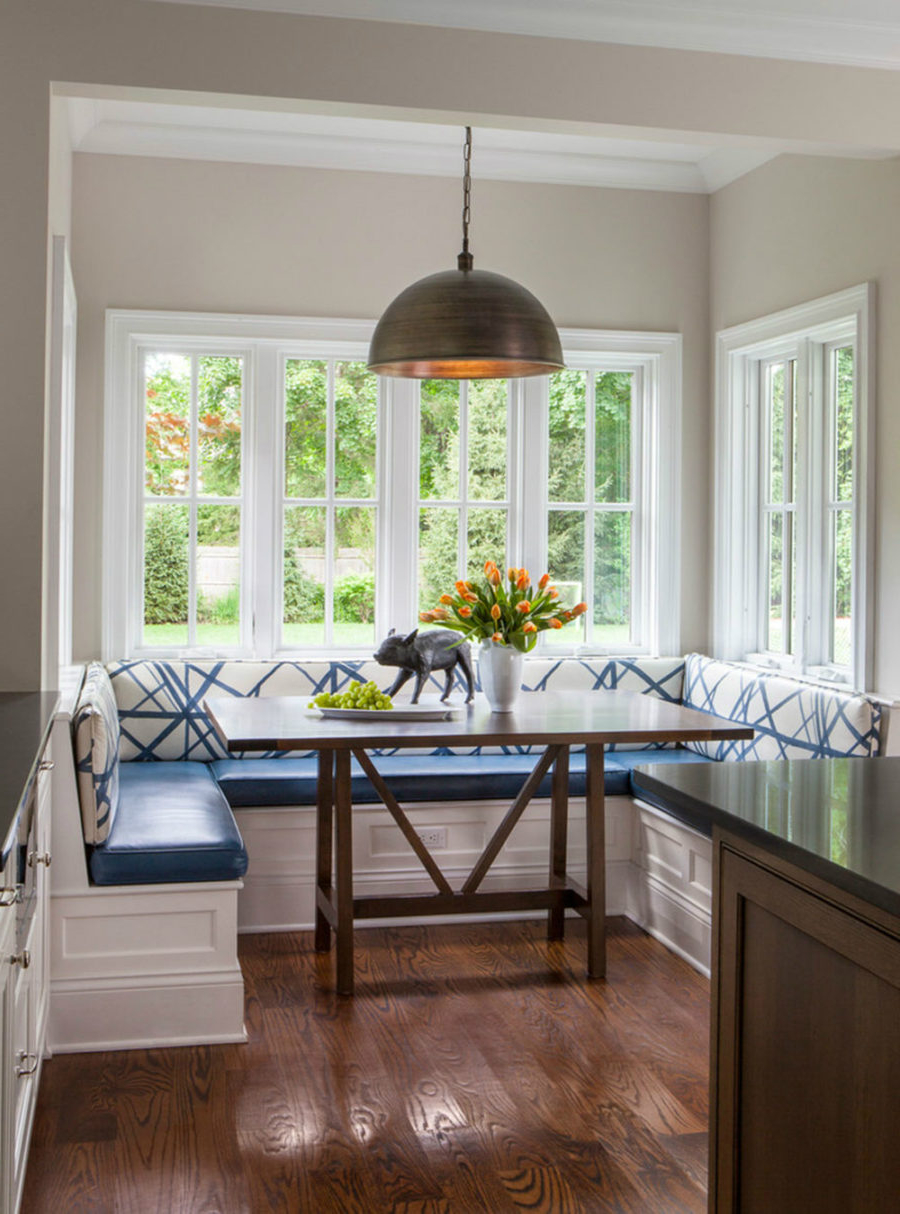
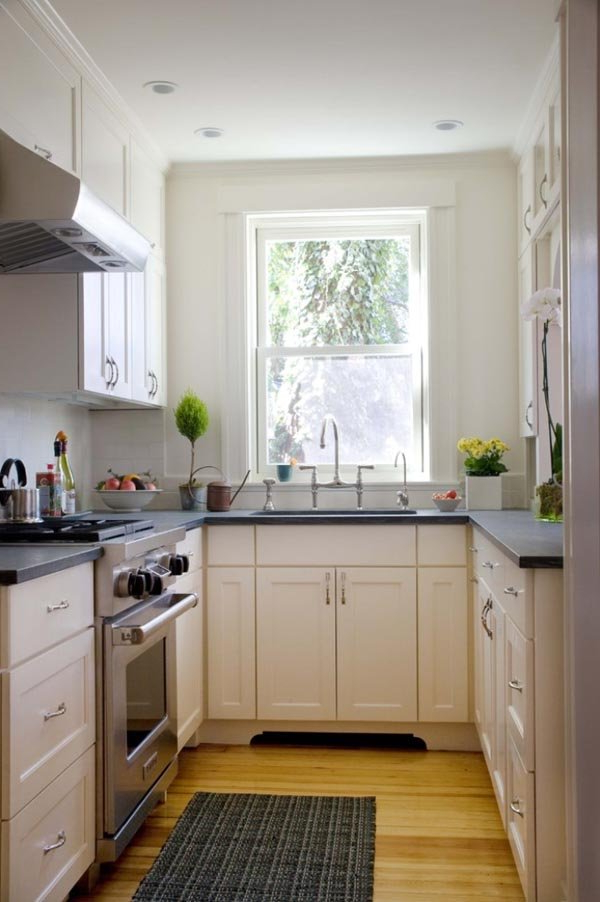
Natural light is your best friend in small kitchens. It creates warmth and makes everything look more expansive. The first step is knowing how to work with existing windows. If you have a window, position your sink or stove near it so you can take advantage of daylight while cooking. This simple trick helps break up the visual weight of appliances and makes the whole space feel less cluttered.
For kitchens without windows, consider installing skylights or light tubes. These can dramatically change the mood of a room that might otherwise feel like a cave. Even small additions like reflective surfaces near windows can help bounce natural light deeper into the space. Try placing mirrors strategically – not just any mirror, but one that reflects something pleasant, like a view of the garden or a cozy corner.
Sometimes the problem isn’t having enough natural light, but having too much glare. This happens when direct sunlight hits countertops or appliances. To fix this, use sheer curtains or blinds that filter the light rather than block it entirely. You’ll still get the benefits of daylight, but without the harsh shadows that make small rooms feel even smaller.
Choosing the Right Artificial Lighting
Artificial lighting needs to complement natural light, not compete with it. When selecting lights for small kitchens, think about layering different types of illumination. Start with general overhead lighting – maybe a sleek pendant or recessed lights that provide even coverage across the entire space. Then add task lighting over areas where you do most of your work, like around the sink or prep area.
Don’t forget about accent lighting. This might be under-cabinet lights that illuminate your workspace or even a small string of fairy lights that add warmth to corners. These subtle touches create depth and dimension.
LED bulbs are essential for small kitchens because they produce less heat and last much longer than traditional bulbs. They also come in various color temperatures, so you can choose warm white for a cozy feel or cool white for a crisp, clean look. The key is consistency – make sure all your lights have similar color temperatures so they don’t create confusing visual contrasts.
Color and Reflection Techniques
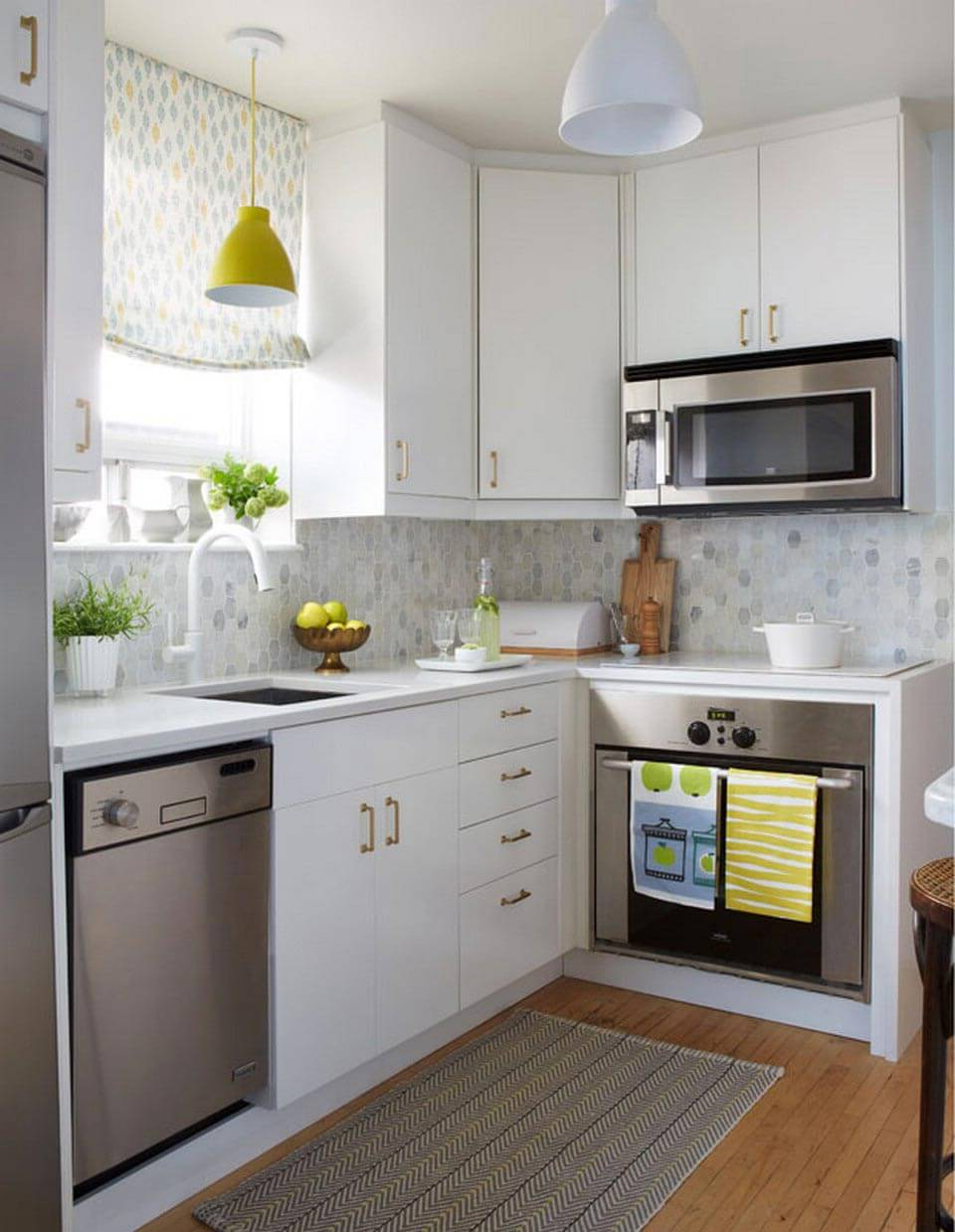
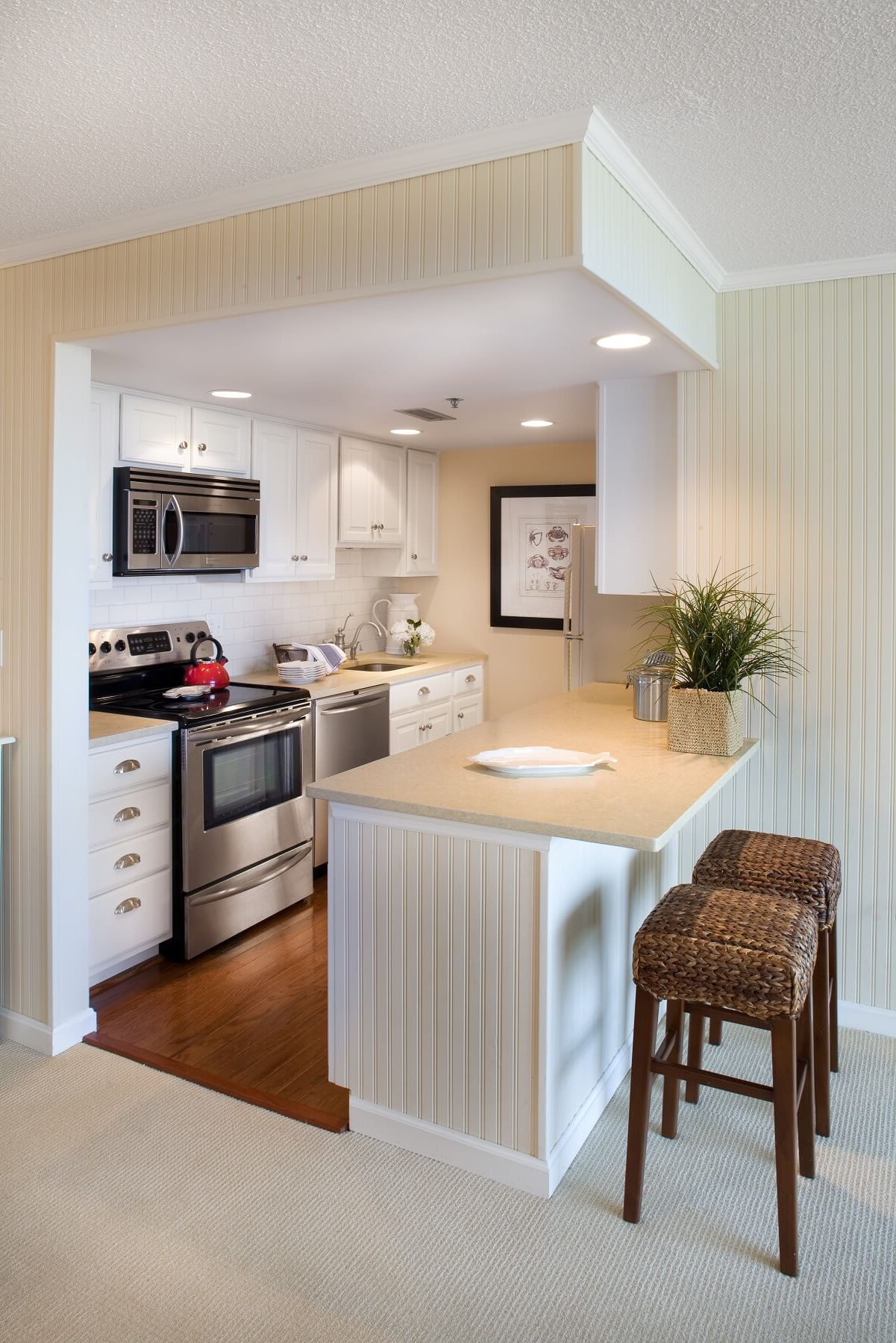
The colors you choose for your small kitchen can either make it feel cozy or claustrophobic. Light colors, particularly whites, creams, and soft pastels, reflect light and make walls appear farther away. This optical trick alone can make a tiny kitchen feel twice its size. But don’t go too extreme – pure white can sometimes feel sterile.
Consider using a two-tone approach: lighter walls with slightly darker cabinetry. This creates visual interest while maintaining that sense of openness. You can also use light-colored flooring that continues the reflective effect throughout the space.
Mirrors are powerful tools in small kitchens. They don’t just reflect light; they also create the illusion of depth. Place a large mirror opposite a window or use a mirror backsplash behind your stove. Just make sure it’s not too overwhelming – a single statement mirror works better than multiple small ones.
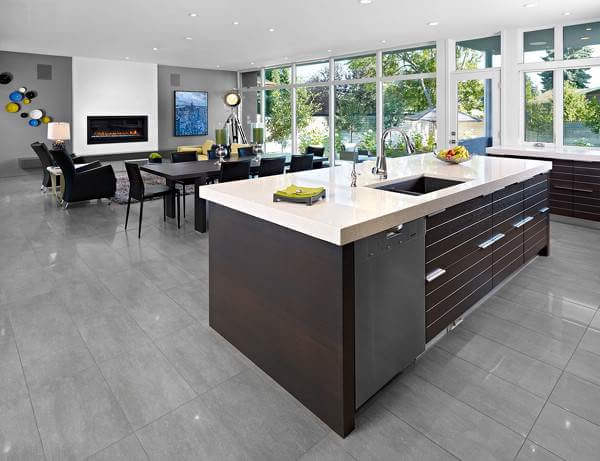
Reflective materials like glossy countertops or metallic accents can also help bounce light around the room. These subtle additions can make a surprisingly big difference in how bright and spacious your kitchen feels.
Smart Storage Solutions
Clutter is one of the biggest enemies of small kitchen spaces. When everything looks cramped and disorganized, it feels smaller than it really is. That’s why smart storage solutions are crucial.
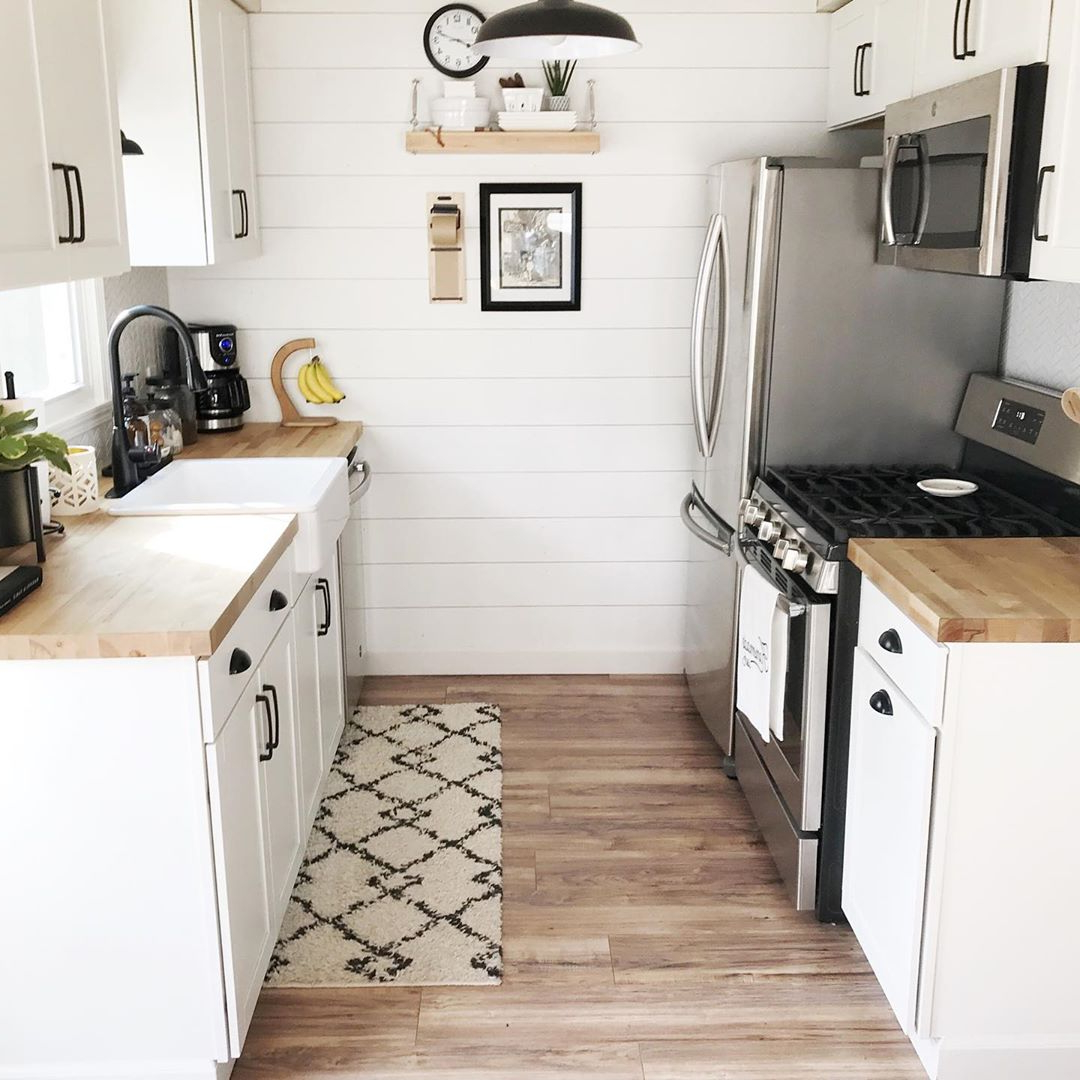
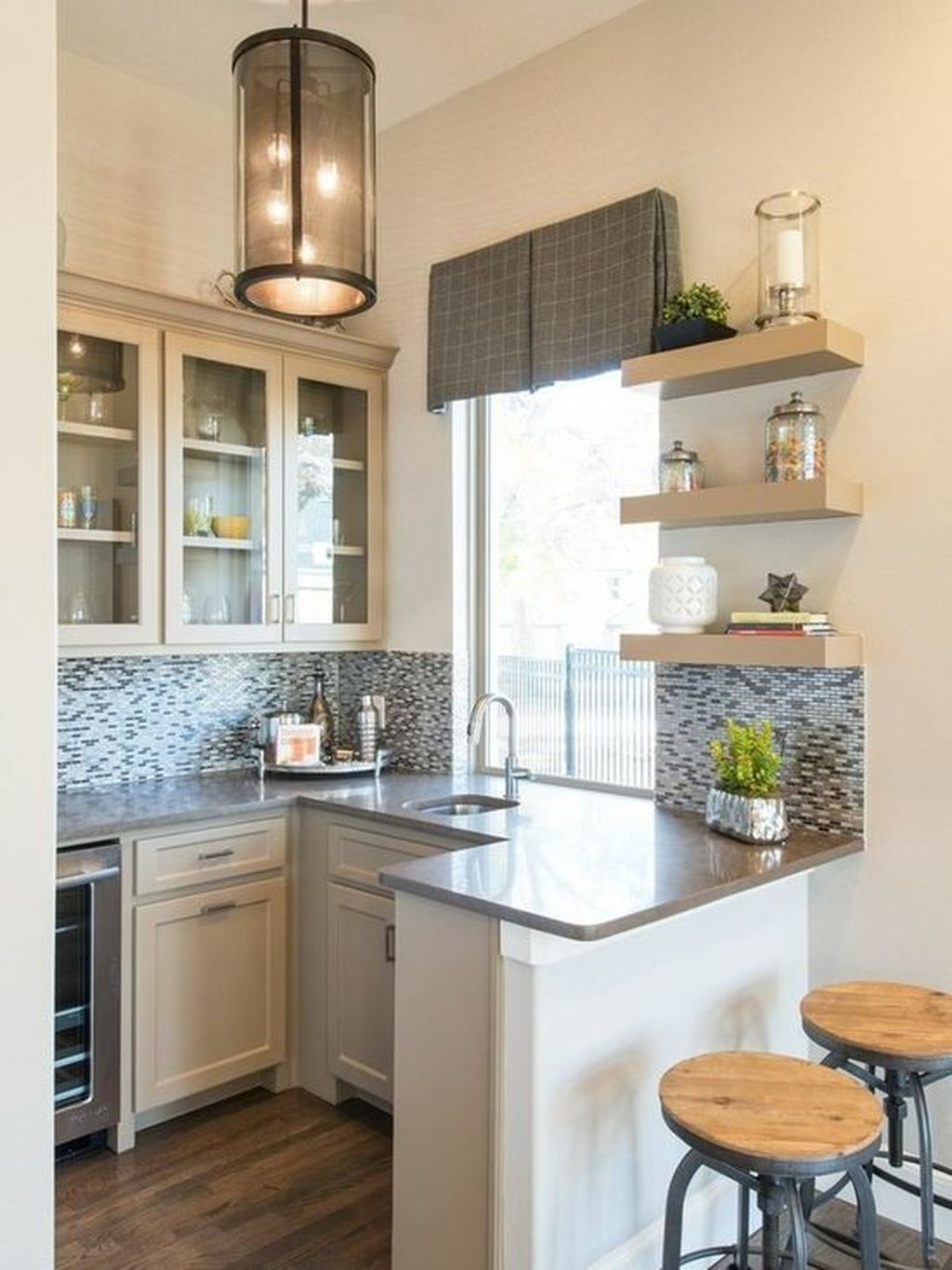
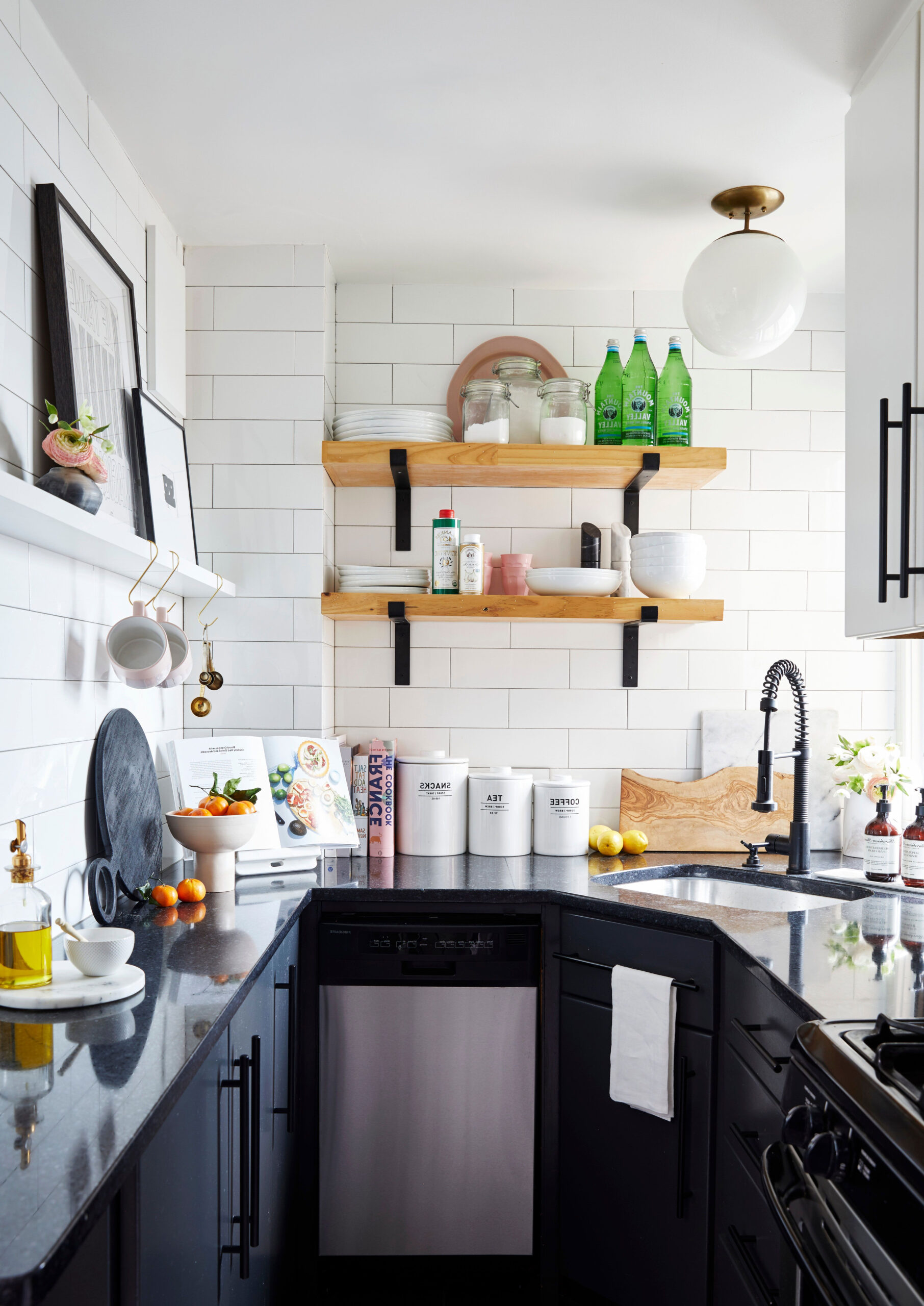
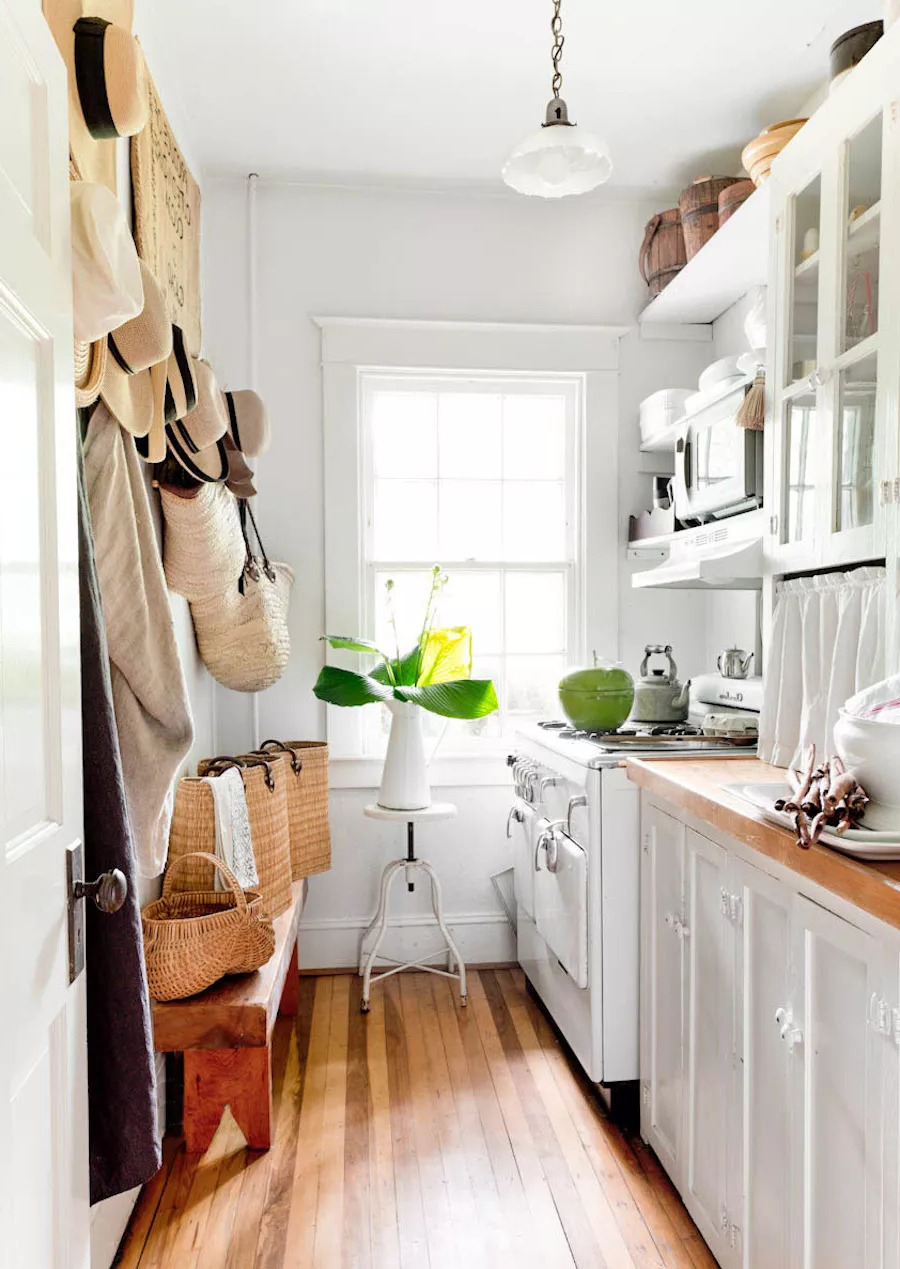
Vertical storage is a game-changer. Install tall shelves that reach toward the ceiling – they draw the eye upward and make the room seem taller. Floating shelves can hold books, plants, or decorative items without taking up floor space. Just make sure they’re not overcrowded.
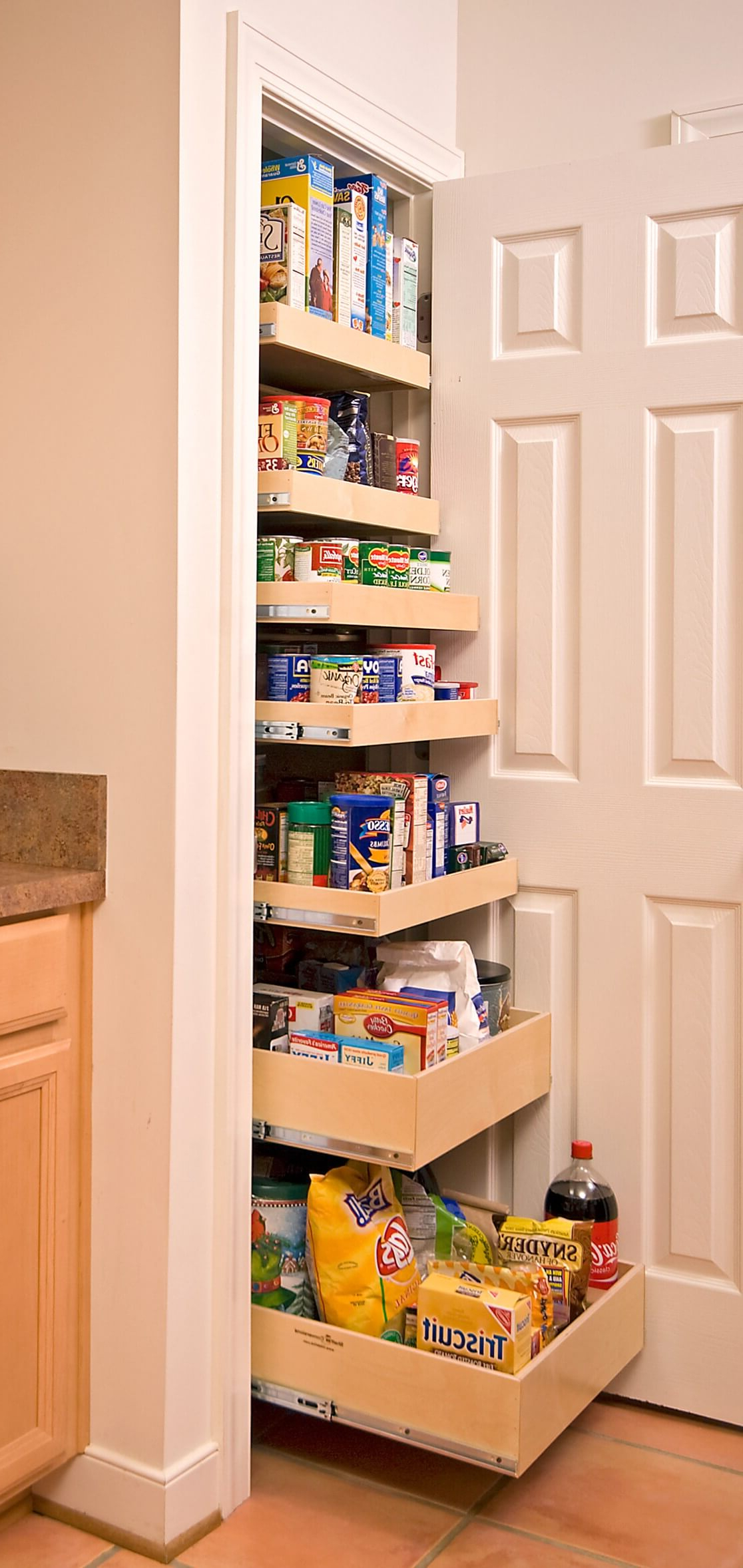
Under-sink storage is another way to maximize space without adding visual bulk. Pull-out trays or baskets keep things organized and easily accessible. You can even use the space under the sink for storing pots and pans.
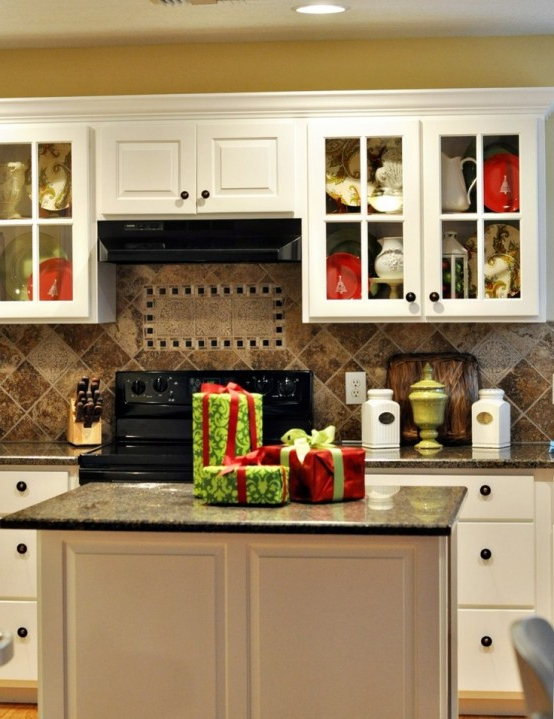
Glass-front cabinets allow you to see what’s inside without opening doors, which helps maintain that open, airy feeling. Plus, they let light pass through, keeping the space brighter. If you’re concerned about privacy or dust, consider frosted glass options that still let in light while hiding the contents.
Multi-Purpose Design Elements
In small kitchens, every element should serve multiple purposes. This philosophy keeps the space feeling uncluttered while maximizing functionality. For example, a breakfast bar can double as a dining area and extra counter space. Look for furniture pieces that can transform from one function to another.
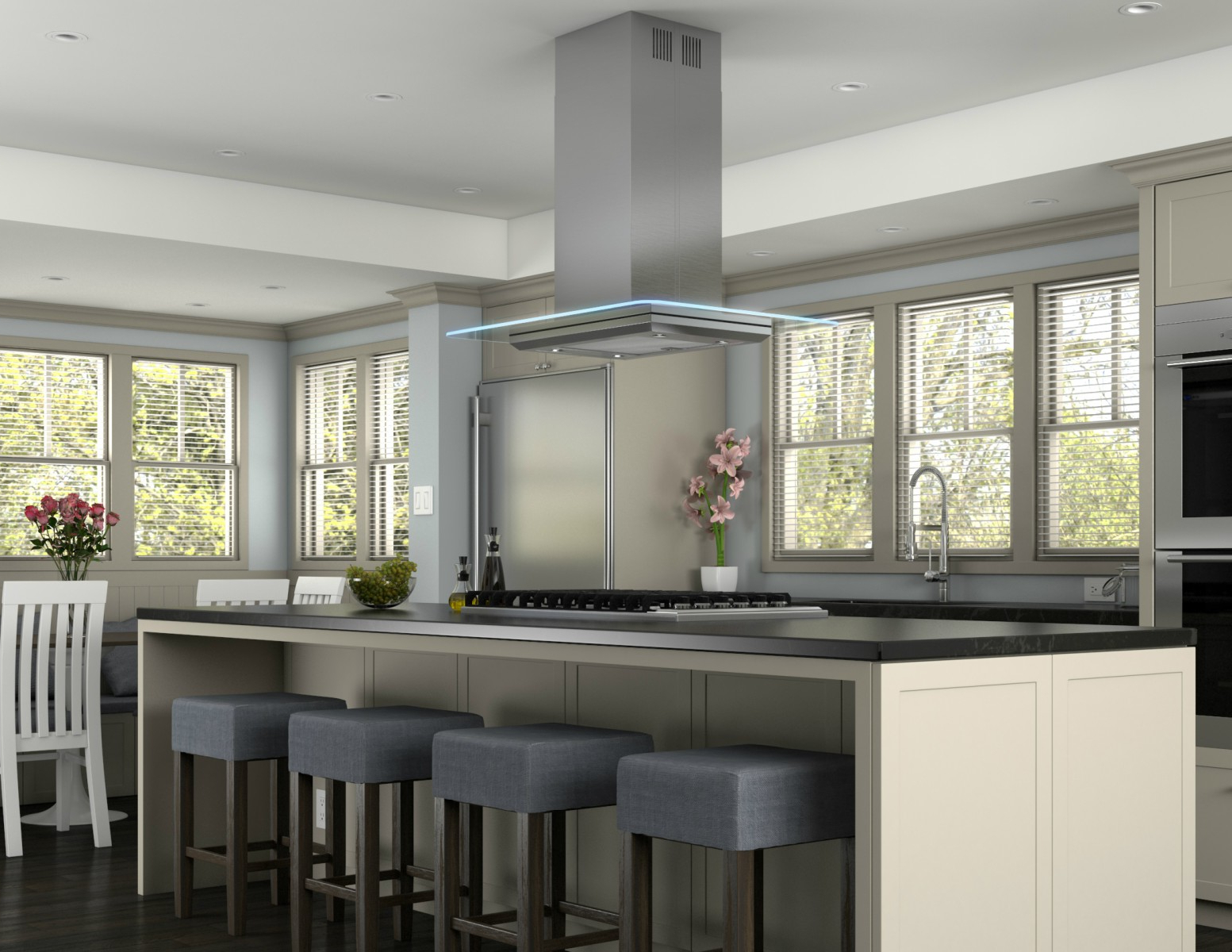
A kitchen island with seating underneath can provide additional storage and dining space. It also acts as a visual barrier between the cooking area and the rest of the home, helping define the kitchen zone without blocking light.
Consider incorporating built-in storage solutions that blend seamlessly with your design. These can include niches in walls, hidden drawers, or integrated appliances that don’t stick out. The goal is to create a unified look that doesn’t feel scattered.
Lighting can also be multi-functional. A chandelier or pendant light can serve as both ambient lighting and a design statement. Choose fixtures that are proportional to your kitchen size – oversized lights can overwhelm small spaces, while tiny lights won’t provide enough illumination.
Practical Tips for Maximum Impact
Here are some practical strategies that can transform your small kitchen immediately:
• Use a light-colored backsplash that extends from floor to ceiling. This creates a continuous line that draws the eye upward.
• Install dimmer switches to control the ambiance throughout the day. You can adjust lighting levels based on time of day or activity.
• Choose appliances that match your cabinetry color scheme. This reduces visual contrast and creates a more cohesive look.
• Add a few well-placed plants to bring life and color into the space. Greenery also helps soften hard lines and adds texture.
• Consider removing unnecessary cabinet doors. Open shelving can make the space feel more open and airy.
These changes don’t require a complete renovation. Many of them can be implemented gradually, allowing you to see results as you go. The key is starting with small improvements and building from there.
Making a small kitchen feel bright and spacious isn’t about magic – it’s about understanding how light affects our perception of space. By combining natural light with strategic artificial lighting, choosing the right colors and reflective surfaces, and implementing smart storage solutions, you can completely change how your kitchen feels and functions. Remember, the goal isn’t to make everything look identical, but to create harmony and balance. Every element should work together to support the overall vision of openness and comfort. Small kitchens can be incredibly functional and beautiful when you apply the right light strategies. The next time you step into your kitchen, pay attention to how the light changes the space throughout the day. Notice which areas feel the most inviting and which ones seem cramped. With these principles in mind, you’ll be able to make adjustments that will transform your kitchen from merely adequate to truly delightful. You don’t need to spend thousands on renovations to create a space that feels bigger and more comfortable. Sometimes, the smallest changes in how you think about light can make the biggest difference.
[sps_html tag=”img” src=”https://roofdrivein.com/wp-content/uploads/2026/01/13-small-kitchen-design-ideas-organization-tips-extra-space-storage-in-light-and-bright-strategies-for-small-kitchen-spaces.jpg” alt=”13 Small Kitchen Design Ideas & Organization Tips | Extra Space Storage in Light and bright strategies for small kitchen spaces” style=”width: 100%; height: auto;”]
[sps_html tag=”img” src=”https://roofdrivein.com/wp-content/uploads/2026/01/design-ideas-for-a-small-kitchen-at-eva-facy-blog-in-kitchen-ideas-decorating-small-kitchen.jpg” alt=”Design Ideas For A Small Kitchen At Eva Facy Blog in Kitchen Ideas Decorating Small Kitchen” style=”width: 100%; height: auto;”]
[sps_html tag=”img” src=”https://roofdrivein.com/wp-content/uploads/2026/01/21-small-kitchen-design-ideas-photo-gallery-within-light-and-bright-strategies-for-small-kitchen-spaces.jpg” alt=”21 Small Kitchen Design Ideas Photo Gallery within Light and bright strategies for small kitchen spaces” style=”width: 100%; height: auto;”]
[sps_html tag=”img” src=”https://roofdrivein.com/wp-content/uploads/2026/01/47-small-kitchen-decor-ideas-for-big-style-with-kitchen-ideas-decorating-small-kitchen-scaled.jpg” alt=”” style=”width: 100%; height: auto;”]
[sps_html tag=”img” src=”https://roofdrivein.com/wp-content/uploads/2026/01/30-best-small-kitchen-decor-and-design-ideas-for-2021-intended-for-light-and-bright-strategies-for-small-kitchen-spaces.jpg” alt=”30 Best Small Kitchen Decor And Design Ideas For 2021 intended for Light and bright strategies for small kitchen spaces” style=”width: 100%; height: auto;”]